Apollo vs Leadline by EaseMyExpo: Which Works Better for Indian Business Data?
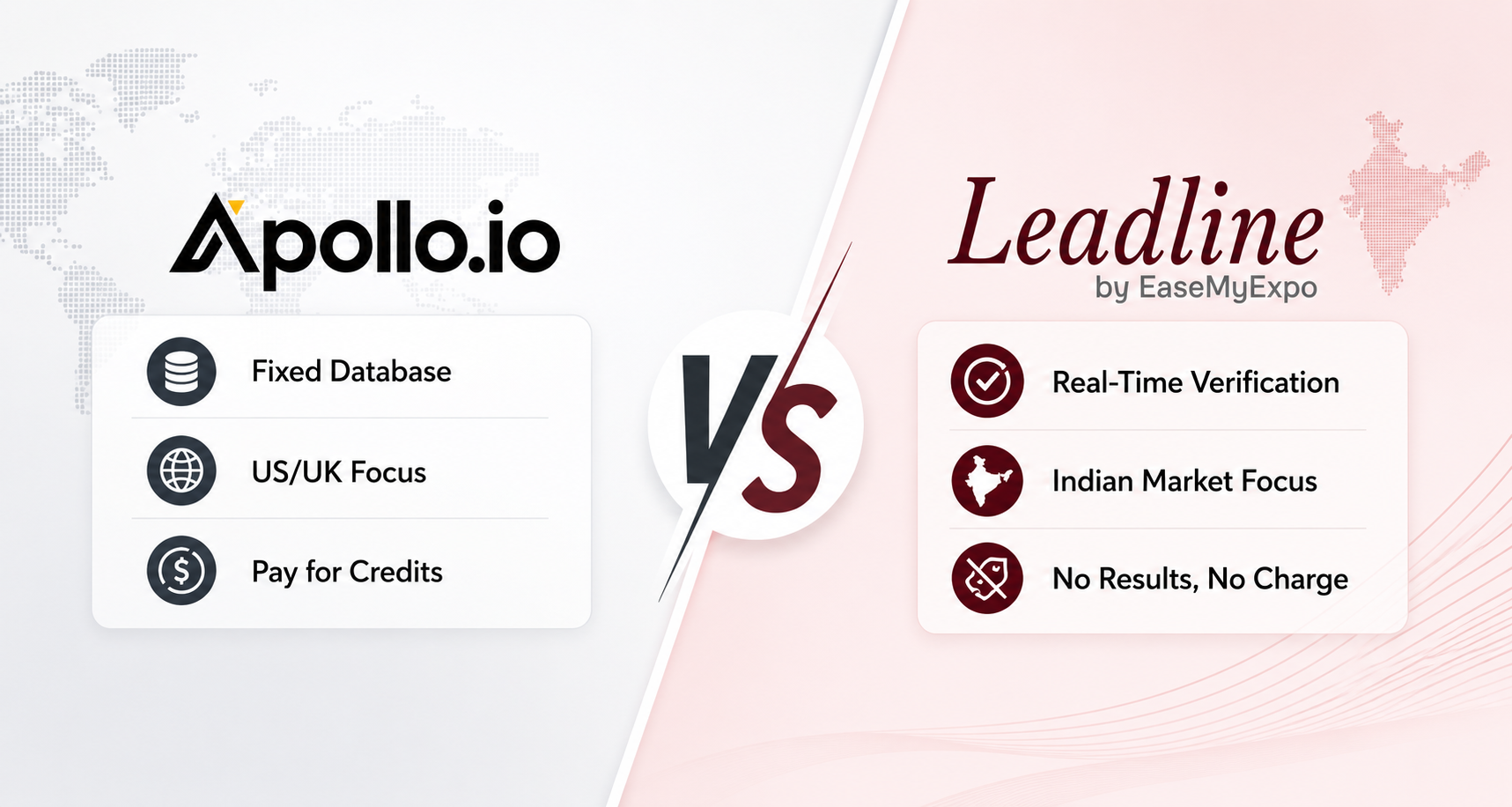
Why Apollo Struggles With Indian Company Data
If you've run an Apollo.io export against an Indian company list, you already know the pattern: the dashboard says "verified," the credits get deducted, and then a third of the list bounces anyway. That's not bad luck. It's not a one-off batch. It's how Apollo's database is built — and Indian companies happen to sit in exactly the part of that build that's weakest. Here's what's actually going on, based on independent review data from G2, Capterra, and hands-on testing breakdowns — not Apollo's own marketing page.
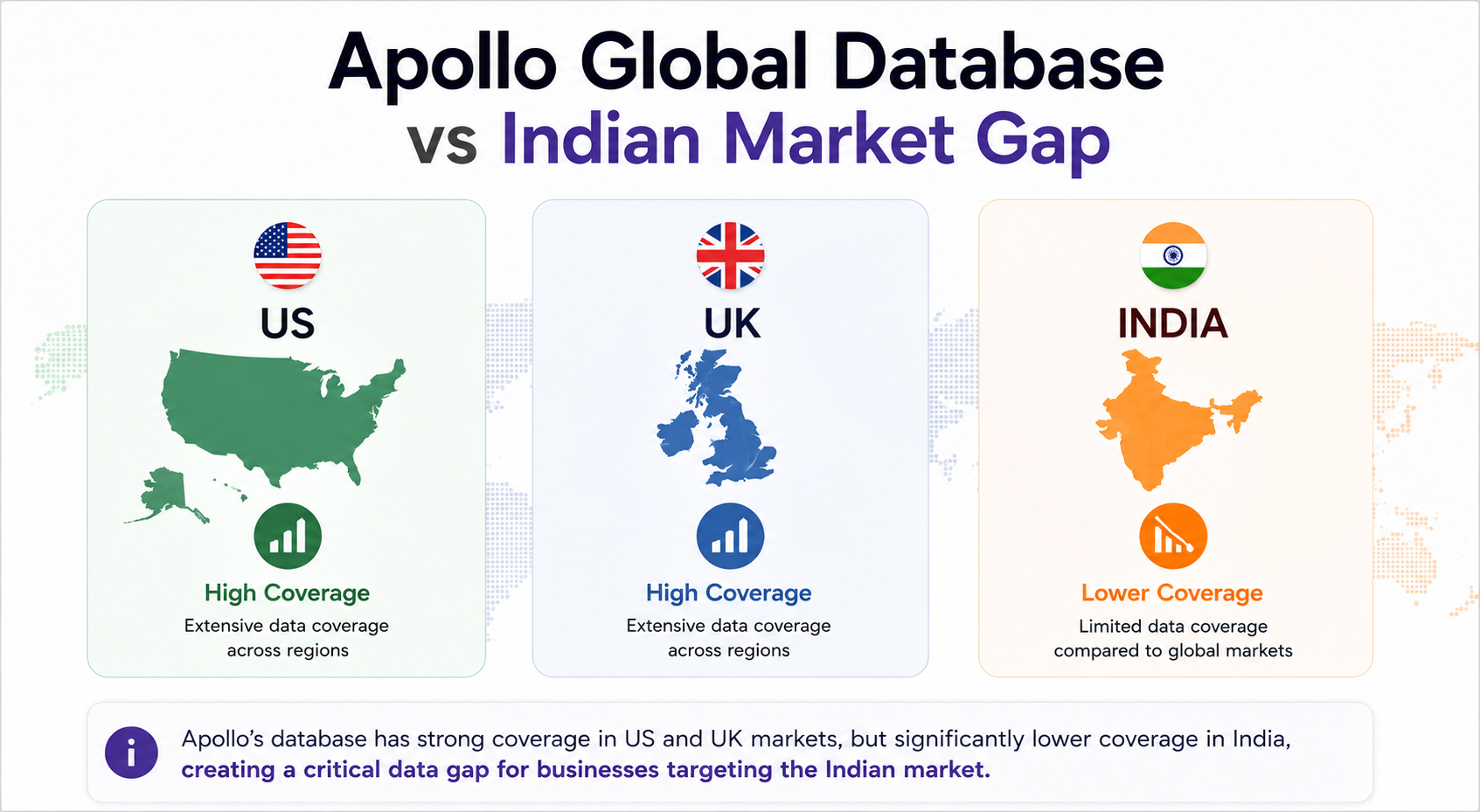
Apollo's Database Is Built From US and UK Contributors
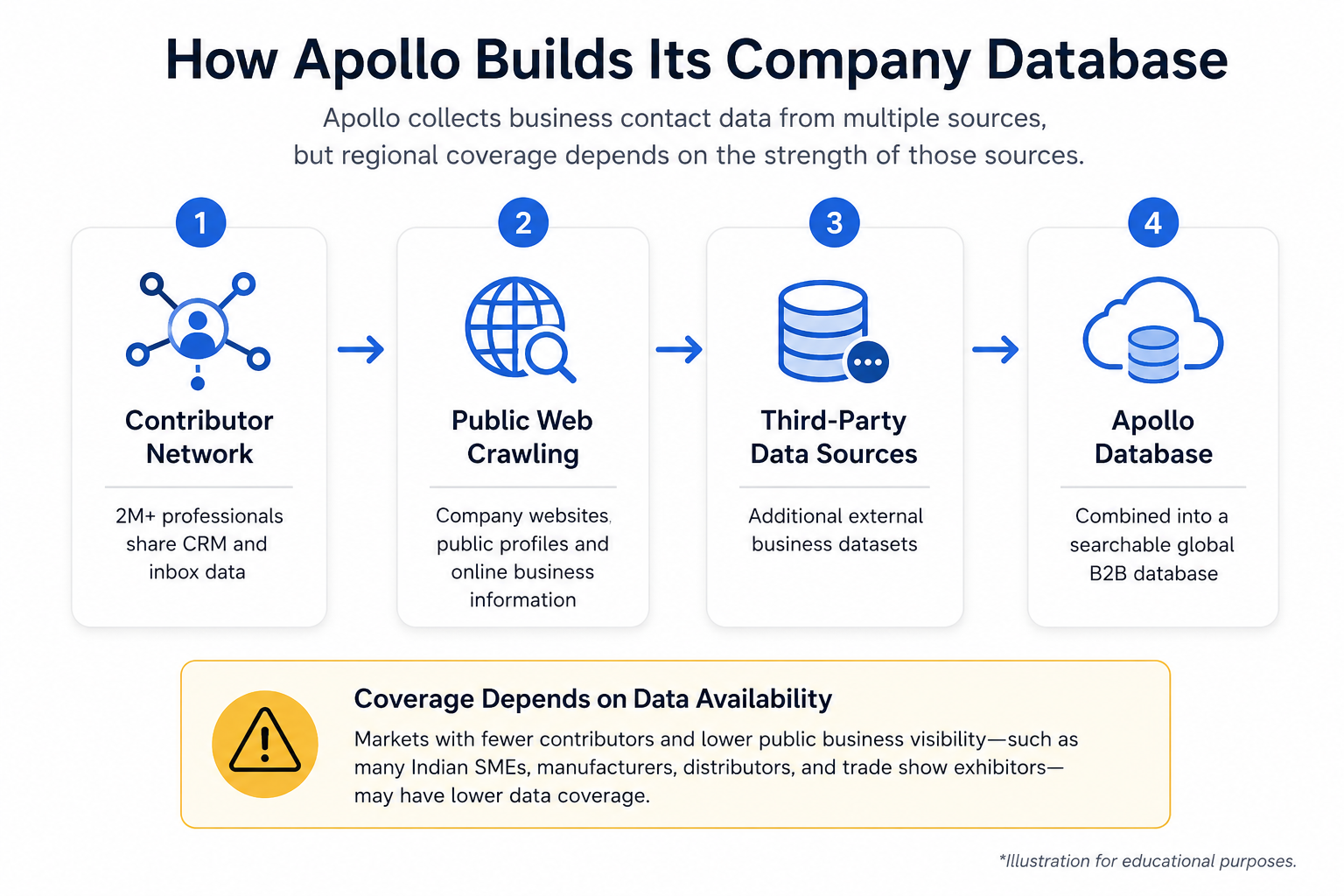
Apollo doesn't license a fixed database the way ZoomInfo does. It builds its data from four sources: a contributor network of over 2 million people who sync their inbox or CRM into Apollo in exchange for credits, its own engagement tracking across bounces and replies, public web crawling, and third-party data feeds. That contributor network is Apollo's biggest asset in the US — and its biggest blind spot everywhere else. The people feeding that network are overwhelmingly American and British SaaS and tech professionals, because that's where Apollo has the longest history and the deepest user base. Indian companies were never well represented in that pool to begin with. The data gap isn't a bug. It's a direct consequence of who's been filling the database for the last several years.
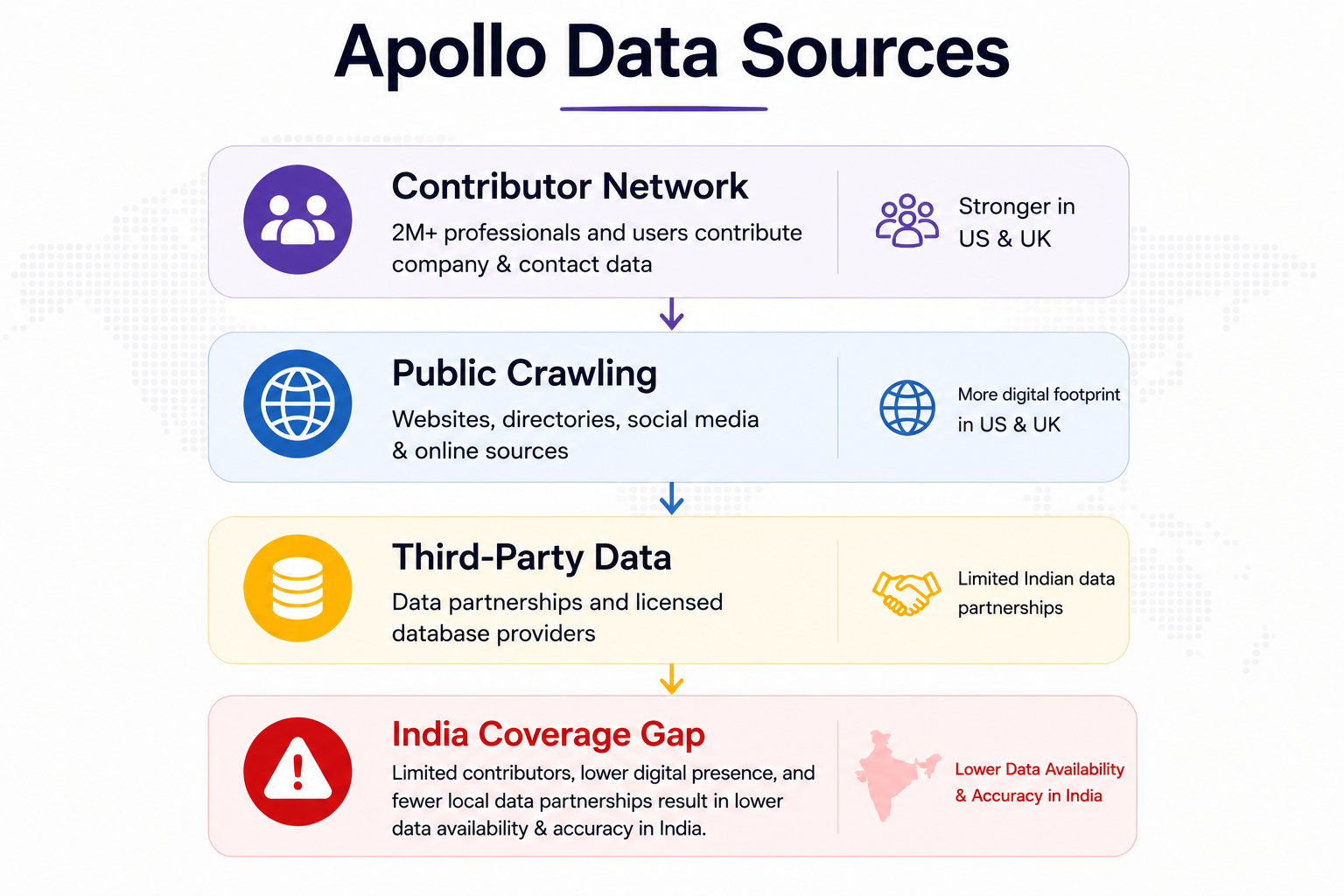
There's No Backup When the Primary Source Comes Up Empty
Most modern enrichment tools use what's called waterfall enrichment — if one data provider doesn't have a contact, the tool automatically checks a second, then a third. Apollo doesn't do this. It enriches almost entirely from its own database, with no fallback layer. In a well-indexed market like the US, that's rarely a problem — the primary source is deep enough on its own. In India, the gap shows up immediately, because there's no second provider catching what the first one missed. Single-source enrichment caps out well below full coverage in markets that aren't already saturated with data — and India is one of those markets.
What Independent Testing Actually Shows
Apollo advertises a high single email accuracy figure. Independent testing tells a different story once you split the data by geography. In the US, contact details typically match somewhere in the 80s, percentage-wise. Outside the US, that figure drops by 15-25 points depending on the region. Reviewers testing Apollo specifically in the APAC region report the same two recurring problems: missing mobile numbers and stale job titles. India falls inside that APAC bucket, and the pattern holds.
The Companies Indian Agencies Need to Reach Are Apollo's Weakest Spot
This is the part most "Apollo review" articles miss entirely, and it's the most important one if you're prospecting in India. Across review platforms, the same distinction comes up again and again: Apollo's data is strong for US-based tech and SaaS companies, and noticeably weaker for smaller companies, non-tech industries, and international markets. That's three strikes for the exact companies Indian agencies are usually trying to reach — manufacturers exhibiting at trade shows, regional distributors, family-run SMEs, construction and infrastructure firms. These businesses don't have the same digital footprint that Apollo's crawlers and contributor network depend on: fewer LinkedIn-listed job titles, fewer corporate email patterns visible online, less activity inside Apollo's own contributor base. It's not that Apollo is bad at finding people. Apollo is built to find a very specific kind of company — and Indian SMEs and exhibitors aren't it.
Find verified contacts for Indian trade show exhibitors
Phone Numbers Are Even Less Reliable Than Email
If email accuracy drops outside the US, direct-dial accuracy drops further. Apollo charges more credits for phone numbers than for email addresses, and multiple reviewers note that the connect-rate on those numbers is inconsistent even in Apollo's strongest markets. Add in how differently Indian businesses use mobile versus landline numbers compared to US corporate phone systems, and the gap widens again. Apollo's plans run from roughly $49 to $119 per user, per month — somewhere between ₹4,000 and ₹10,000 per seat, every month, billed in a foreign currency. For a small Indian exhibition agency or a 5-person sales team, the standard fix for poor data coverage — buy more credits, upgrade the tier — gets expensive fast, in a currency exchange rate most Indian SMB budgets weren't built around. You end up paying enterprise-tier, US-dollar prices for a dataset that wasn't built with your market in mind.
So What Should Indian Companies Use Instead?
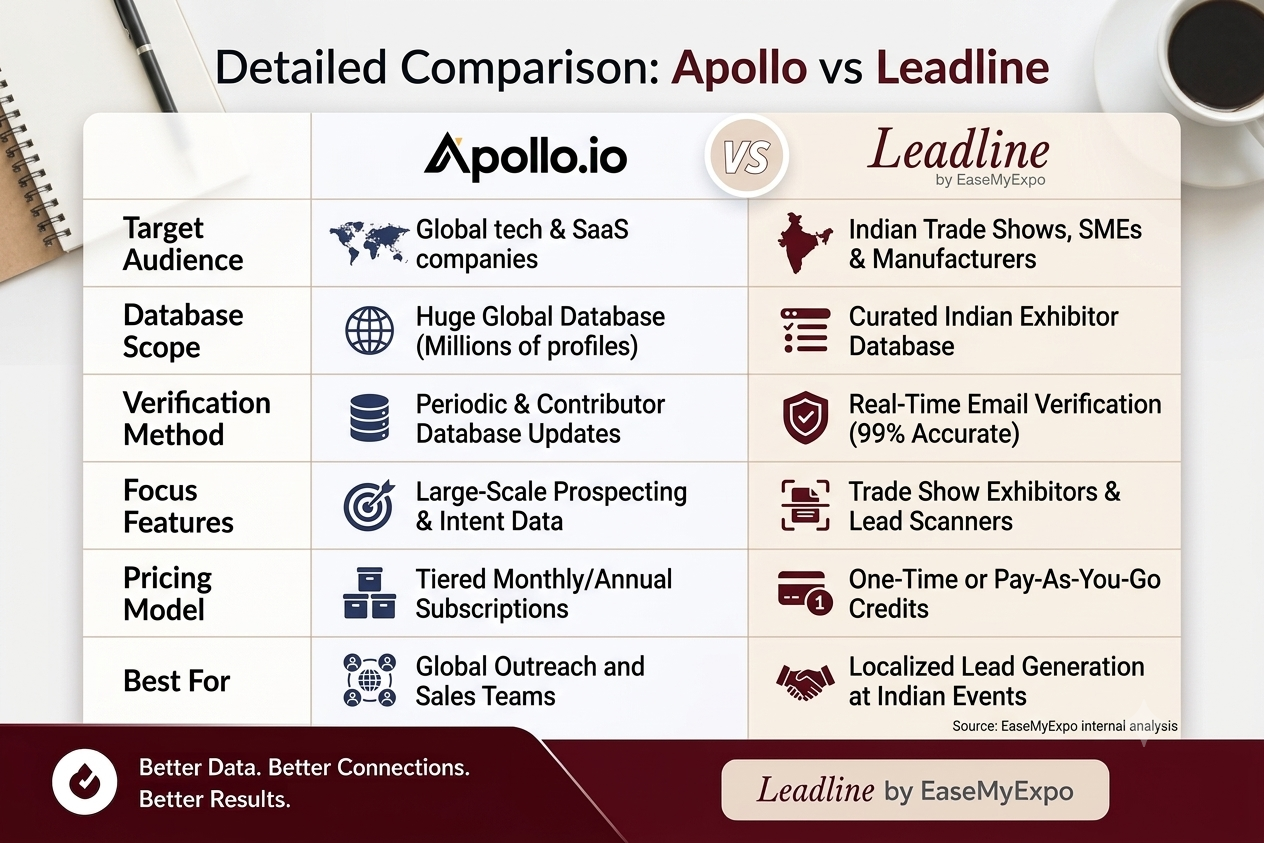
To be fair to Apollo: it's a genuinely strong tool if your prospect list is US or UK tech companies. That's the market it was built for, and it shows. But if your work involves Indian companies specifically — trade show exhibitors, regional SMEs, manufacturers, distributors — you need a tool that starts from a different premise: that the company you're trying to reach might not have a polished LinkedIn presence or a contributor inside Apollo's network, and you need a way to verify their contact details directly rather than pull them from a dataset that was never deep in that segment to begin with. That's the gap the Leadline by EaseMyExpo was built to close. Instead of searching a fixed database and hoping the record exists, Leadline by EaseMyExpo takes the company names you already have — from a floor plan PDF, an exhibitor directory URL, or a plain list — and verifies each one against live mail servers in real time. No record means no charge, instead of a credit spent on a guess.
Extract leads from an exhibition floor plan PDF
FAQs
Does Apollo.io work at all for Indian companies?
It can find some contacts, particularly at larger, digitally active Indian companies with a strong LinkedIn presence. For SMEs, manufacturers, and regional exhibitors — the kind of companies most Indian B2B and event agencies target — coverage and accuracy drop noticeably, based on independent review data.
Why do Apollo exports have higher bounce rates in India compared to the US?
Apollo's database is built primarily from a US/UK-heavy contributor network with no fallback to secondary data providers. Independent testing shows accuracy dropping meaningfully outside the US, with India falling into the weaker APAC coverage band.
Is there a cheaper Apollo alternative for Indian agencies?
Yes. Tools priced in INR with credit-based, pay-per-result pricing — like Leadline’s base plan starting at ₹199 and Pro plan at ₹399 — avoid the USD per-seat cost that makes Apollo expensive to scale for small Indian teams.
What's the best Apollo alternative for finding exhibitor or trade show contacts in India?
General databases like Apollo, ZoomInfo, and LinkedIn Sales Navigator have no concept of trade show participation. Leadline by EaseMyExpo starts directly from the exhibitor list or floor plan itself, which is a more direct and more current source for this specific use case. For the fuller breakdown against ZoomInfo and Sales Navigator too, see our pricing and comparison FAQ.